
Case Study

Fluazifop-P for Reed Sweet Grass

Why replication is needed before scaling up weed management

Image
Glyceria maxima (DBCA)

Quick facts

Project Start Date

Project start date2000

Region

RegionGingin, WA

Lead By

Lead byDBCA Swan Region

Lead By

AuthorKate Brown and Kris Brooks

The Problem

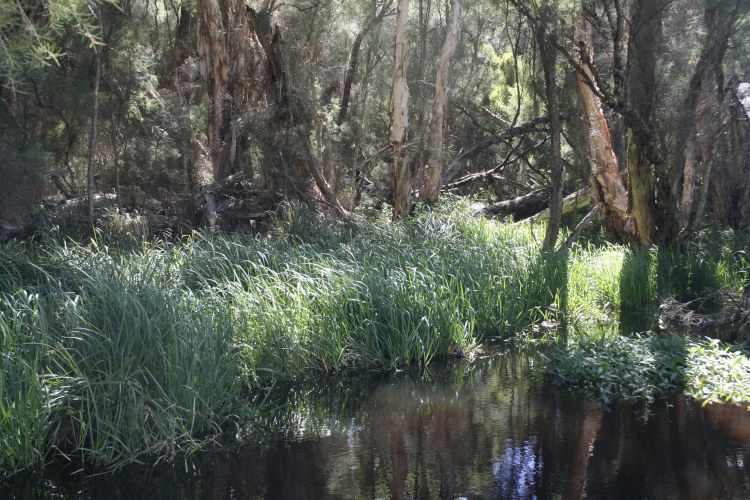
Reed sweet grass (Glyceria maxima) is one of several serious weeds invading the remnant flooded gum (Eucalyptus rudis) and swamp paperbark (Melaleuca rhaphiophylla) woodlands along Gingin Brook. With little native vegetation remaining along the brook, effective weed control was needed to reduce the dominance of reed sweet gras and encourage recovery of native plant communities.
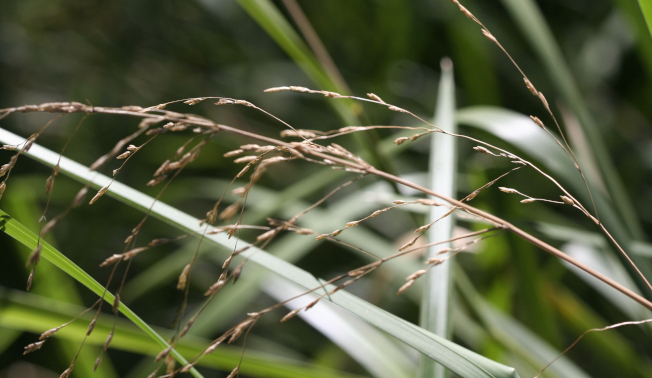
Glyceria maxima

Because the grass grew amongst native sedges and other indigenous vegetation, the use of a non-selective herbicide was not a suitable option.
What was tried

To assess the effectiveness of the grass-selective herbicide Fluazifop-P, a single permanent 5 m × 5 m monitoring plot was established. Before treatment, reed sweet grass occupied approximately 90% of the plot, while native tassel sedge (Carex fascicularis) and tall sedge (C. appressa) occupied the remaining 10%.

In late February, the reed sweet grass was treated with Fluazifop-P at 10 mL/L plus wetter at 3.5 mL/L. Vegetation cover was monitored throughout the year.

By November, reed sweet grass cover had decreased to approximately 25%, with much of the remaining grass appearing to be reinvasion from the plot margins. Cover of the two native sedge species had increased to around 25%, and numerous sedge seedlings were present. Seedlings of flooded gum and swamp paperbark were also recorded, indicating encouraging native regeneration.

Scaling up

The trial results appeared highly promising, so the decision was made to treat the entire infestation using Fluazifop-P at 10 mL/L with a penetrant as the wetting agent. The original trial plot was also included and resprayed.

Unlike the trial treatment, which was applied in late summer, the larger-scale treatment commenced in early summer so that two applications could be completed while the site remained dry.

Within the trial plot, which had now received two treatments, reed sweet gras cover declined further to approximately 5%. Native sedge cover remained stable at around 25%, and sedge seedlings continued to be abundant. However, exposed ground created opportunities for several annual weeds and two perennial weed species to establish.

What was the outcome

The encouraging results observed within the trial plot were not replicated across the broader infestation. Although the November treatment caused visible damage to reed sweet gras, substantial infestations remained throughout the site.

The early-summer treatment was clearly less effective than the original late-summer application. In addition, some native Carex plants showed signs of herbicide damage.

The differing outcomes may have been influenced by the change in treatment timing, the use of a different wetting agent, or a combination of both factors.

Management implications

This case study demonstrates how treatment outcomes can be strongly influenced by factors such as application timing and adjuvant selection. While small-scale trials are valuable for identifying potential control options, their results may not always be repeatable under different conditions.

Before committing resources to large-scale weed control programs, it is important to replicate promising treatments across multiple sites, seasons, and operating conditions to confirm that results are reliable and can be consistently achieved

References

Case studies


Get involved

Western Australian bushland needs your help. Volunteers play a vital role in identifying, monitoring and removing invasive weeds across the state. Whether you are a landowner, bushwalker or community group, there are practical ways to make a difference.

Find volunteering opportunities

Acknowledgement of Country

The Government of Western Australia acknowledges the traditional owners throughout Western Australia and their continuing connection to the land, waters and community. We pay our respects to all members of the Aboriginal communities and their cultures; and to Elders both past and present.